Is VCX Halal? A Closer Look at Fundrise's Venture Fund

The Fundrise Innovation Fund (ticker: VCX) has been generating a lot of buzz since listing on the NYSE. It gives everyday investors access to a portfolio of private tech companies like Anthropic, OpenAI, SpaceX, and Databricks through a regular brokerage account. No accredited investor status required.
The appeal is obvious. And naturally, you might be wondering: is it halal?
We took a close look. Here's what we found.
What VCX actually is
VCX is a closed-end fund (CEF) that holds stakes in private tech companies. It launched in July 2022 as a Fundrise-exclusive offering before listing on the NYSE. The pitch is straightforward: the biggest tech companies stay private for years longer than they used to, so by the time they IPO, most of the growth has already happened. VCX lets you buy in earlier.
The portfolio is heavily concentrated in AI. Anthropic is the top holding at 20.7%, followed by Databricks (17.7%), OpenAI (9.9%), Anduril (6.9%), Ramp (5.1%), and SpaceX (5.0%). The fund charges a 1.85% annual management fee with no carried interest, far cheaper than traditional venture capital funds.
As a conventional investment vehicle, it's compelling. But from a Shariah perspective, the problems run deep.
Private companies are a black box
Normally, when we screen a stock on Zoya, we pull the company's audited financials and run them through established screening criteria. This works because public companies are required to disclose detailed financial statements every quarter.
Private companies have no such obligation. Anthropic, OpenAI, Databricks, SpaceX: none of them publish the kind of financial data we'd need to run a proper check.
This alone would make VCX's compliance status indeterminate. We literally can't make the call on 85% of the portfolio. But in this case, we don't need to rely on the opaque private holdings to reach a verdict. The fund itself gives us more than enough to work with.
The fund structure fails on its own
Even if every single company in VCX's portfolio were perfectly halal, the fund wrapper itself would still fail screening. There are three clear structural issues, all sourced directly from VCX's own prospectus and SEC filings.
14% allocated to conventional fixed income
According to VCX's published holdings, roughly 14% of the fund sits in "Net Cash, Fixed Income." In plain terms, that means a meaningful chunk of the fund is parked in interest-bearing instruments like Treasury bills or corporate bonds. This isn't incidental interest earned on a corporate bank account. It's a deliberate capital allocation to assets that generate returns through riba. That's a clear violation.
Fund-level leverage
Closed-end funds are allowed to borrow money to amplify returns. VCX's own disclosures reference "fund debt" as a component of its net asset calculations. Borrowing at interest to juice investment returns is straightforwardly impermissible. It doesn't matter how good the underlying companies are if the fund itself is financing operations through conventional debt.
Derivatives and pooled vehicles
The prospectus discloses that VCX may gain exposure to private companies through derivatives or private pooled investment vehicles (SPVs). Conventional derivatives involve interest-based pricing, speculative structures, or a disconnect between the instrument and any real underlying asset. SPVs in the venture capital world also commonly use leverage and interest-bearing credit facilities to fund their positions. Without any transparency into the specific instruments or vehicle structures being used, we have to treat this as another layer of non-compliance.
Any one of these would be a significant concern. Together, they make the structural case against VCX clear-cut.
The holdings make it worse
Set aside the fund structure for a moment. Several of VCX's actual portfolio companies have business models that directly violate Islamic ethical screens.
Anduril Industries (6.9% of portfolio) is the most straightforward case. Anduril is not a dual-use tech company with some military contracts. It's a dedicated weapons manufacturer. They build autonomous weapons systems, military drones, and defense AI software. They recently secured $1.5 billion specifically to construct a massive factory for producing autonomous weapons at scale. Shariah screening standards prohibit investing in weapons manufacturing. At nearly 7% of the fund, this is a major allocation to a clearly impermissible business.
Ramp (5.1% of portfolio) operates in the corporate credit card and expense management space. While interchange fee revenue is generally permissible, Ramp's expanding suite of working capital and credit facilitation products makes it very likely that some portion of revenue is tied to interest-based lending. Without access to their private financials, we can't confirm this definitively, but the nature of the business leans heavily toward non-compliance.
Epic Games (3.5% of portfolio) is the maker of Fortnite and the Unreal Engine. Gaming companies are inherently difficult to screen because compliance depends heavily on the nature of the games themselves. Some titles may be perfectly fine, while others involve violence, gambling-like mechanics, or other objectionable content. With a company like Epic, whose flagship title is a combat-based game with a massive in-game economy, the concerns are real but hard to quantify precisely.
This isn't just a VCX problem
It's worth noting that VCX's closest peer, the Destiny Tech100 (DXYZ), is another public CEF holding private tech companies that faces the same issues. Same opacity problem with private holdings, same structural concerns with the CEF wrapper. If you're looking at any publicly traded venture fund built on a conventional closed-end structure, you're going to run into these same compliance failures.
This isn't a flaw specific to Fundrise. It's a structural reality of how these products are built.
The final verdict
VCX is not Shariah-compliant. The fund's structural mechanics alone disqualify it, and the portfolio holdings remove any remaining ambiguity.
This isn't a borderline case that comes down to financial ratios. The violations are fundamental.
So what are the alternatives?
There is no halal equivalent to private venture capital exposure right now. That's a gap in the market, and it's one the Islamic finance industry needs to address as more wealth creation happens in private markets.
But public markets still capture enormous tech upside. Companies like Apple, NVIDIA, Broadcom, Microsoft, and Meta are driving the AI revolution, and they're all publicly traded and screenable. Zoya's Baskets make it easy to find them, organized by themes like Artificial Intelligence, Semiconductors, and Disruptive Innovation, and always kept updated to be 100% Shariah-compliant.
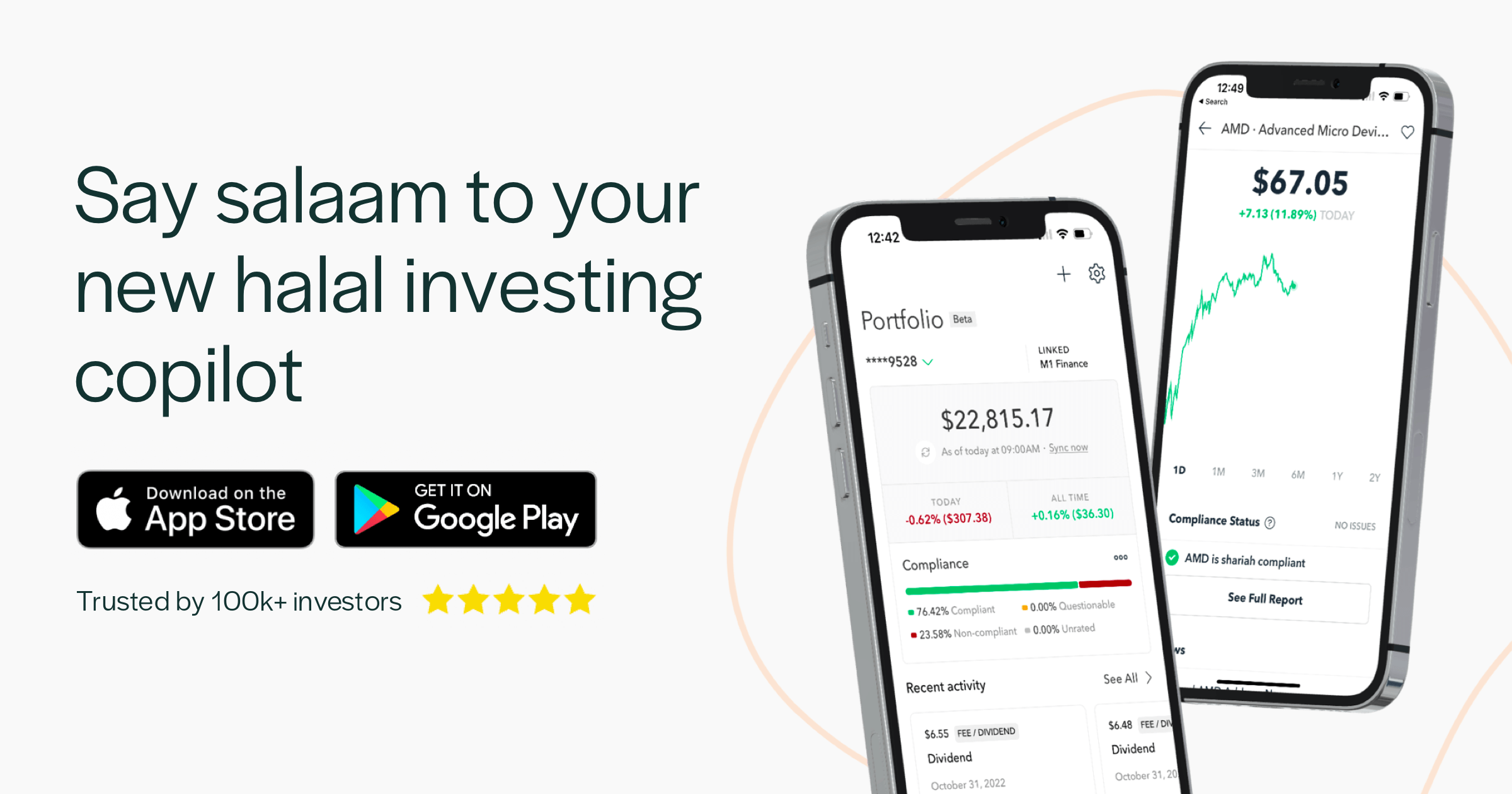
زويا: تطبيق الاستثمار الحلال
تجعل Zoya الاستثمار الحلال سهلاً من خلال مساعدتك في بناء محفظة استثمارية متوافقة مع الشريعة الإسلامية ومراقبتها بثقة ووضوح.